
North Carolina Police Blotter Records
North Carolina police blotter records track arrests, bookings, and criminal incidents across all 100 counties. Sheriff's Offices and local police departments maintain these logs as part of the public record. You can search police blotter data online through county P2C portals, request copies from the Sheriff's Office, or visit the Clerk of Superior Court for court case files. The North Carolina State Bureau of Investigation also serves as the central hub for criminal history checks statewide. This page covers how to find and access police blotter records throughout North Carolina.
North Carolina Police Blotter Quick Facts
North Carolina Police Blotter and Criminal History
The North Carolina State Bureau of Investigation is the central repository for criminal information in the state. The SBI maintains records of arrests, charges, and dispositions reported by law enforcement agencies statewide. Under N.C.G.S. Chapter 114, the SBI has authority to collect and distribute criminal history data. This makes it the primary source for comprehensive police blotter information beyond what local agencies publish.
State and federal laws give individuals the right to request a copy of their own criminal history record. This process is called a "Right to Review" check. The SBI conducts a fingerprint-based criminal history search and issues a response letter on SBI letterhead. A state-level check costs $14 and requires the "Request for Access to Criminal History Record Information" form, which is available in both English and Spanish from the NCSBI.gov website. For a combined state and FBI check, the fee is $38.
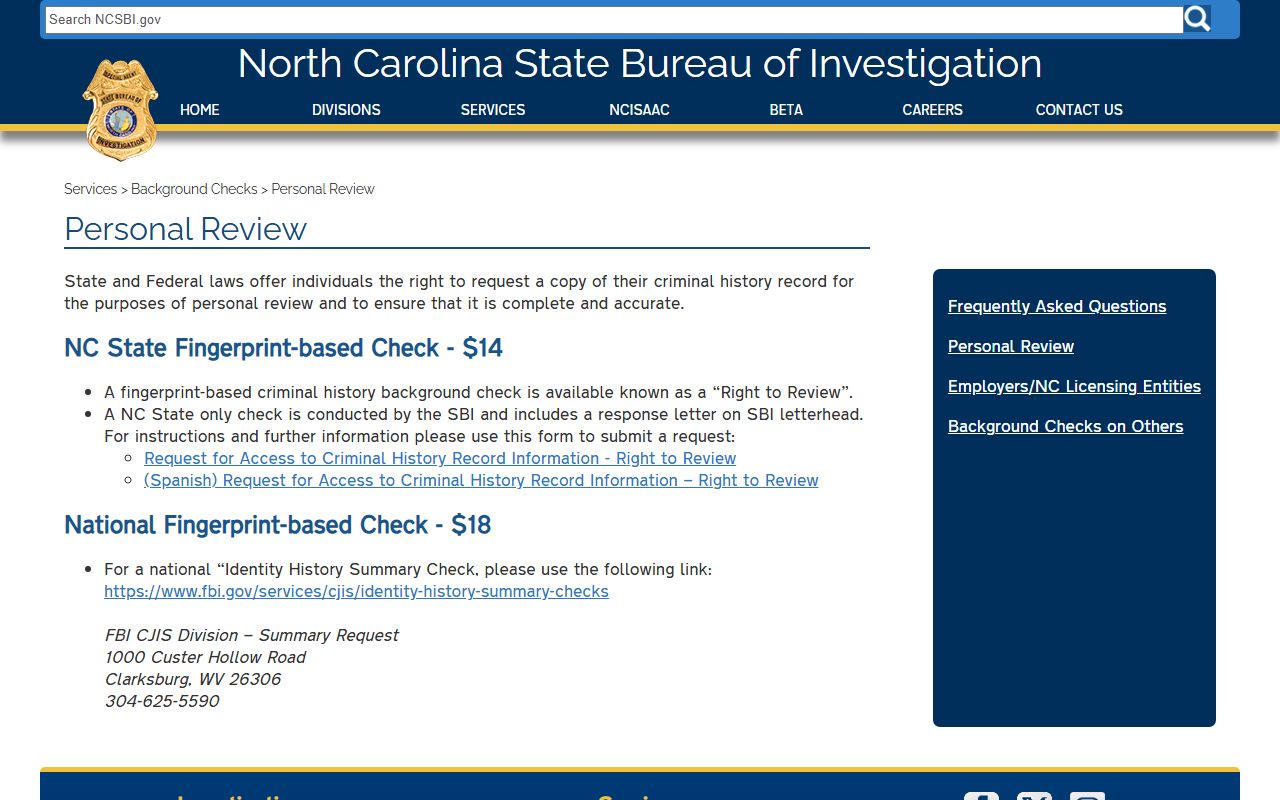
The SBI also provides forms for specific purposes. Citizen forms include the Background Check for NC Criminal Records, the Background Check for Adoption Process, and the Restoration of Firearms Consent Form. All are fillable PDFs that can be completed online before printing. You can download them from the SBI Forms page.
Note: The SBI periodically updates its forms, so always download the most current version directly from their website.
How to Search Police Blotter Records Online
Many North Carolina counties offer free online access to police blotter data through Police to Citizen portals. These P2C systems let you search jail bookings, view arrest records, check active warrants, and read daily bulletins. Counties like Forsyth, Guilford, Buncombe, Robeson, and Wake all run P2C portals that are available around the clock. You do not need to register or pay a fee for basic searches on most of these systems.
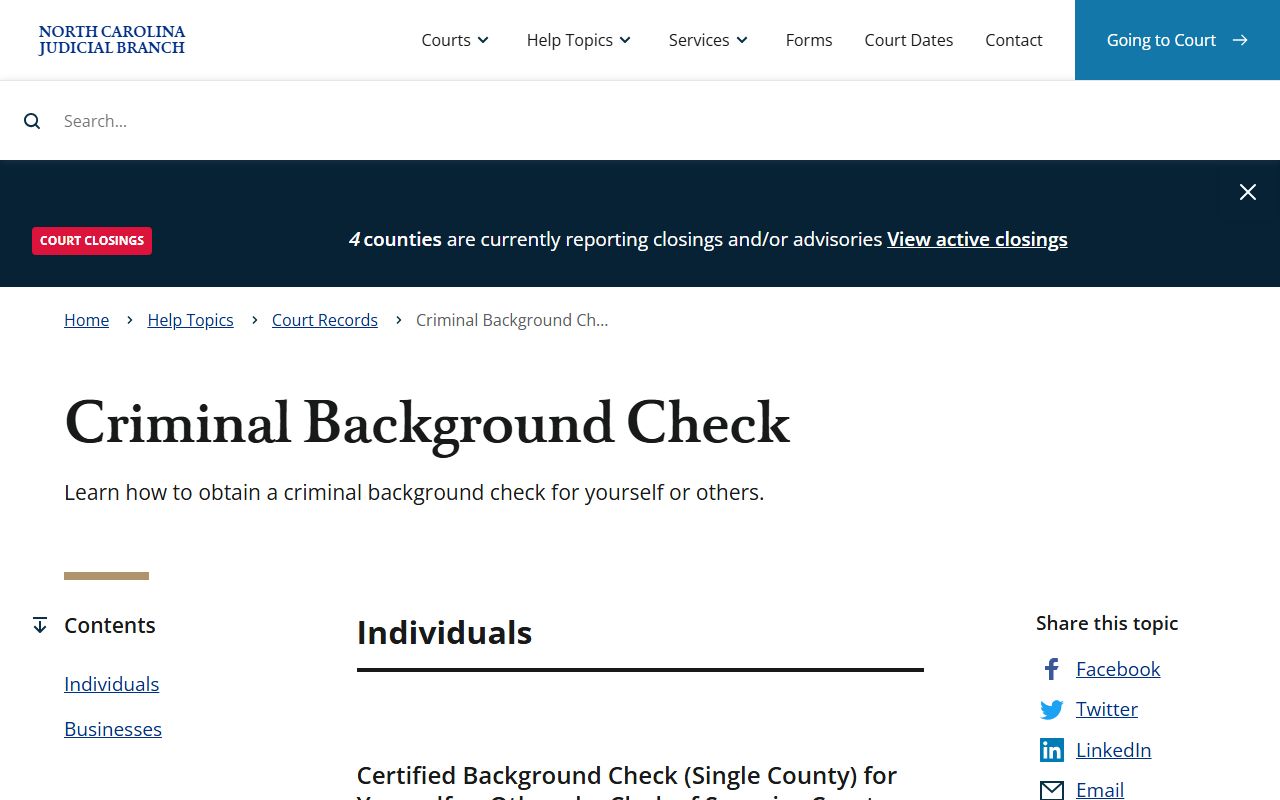
The North Carolina eCourts portal provides access to court records across all 100 counties. You can search by party name or case number to find criminal cases that stem from police blotter entries. The system is free for basic case data. For copies of actual documents, contact the county Clerk of Superior Court or visit the courthouse in person. Under N.C.G.S. Chapter 132, public records are the property of the people, and citizens have the right to access them.
To search police blotter records online in North Carolina, you typically need:
- Full name of the person you are searching for
- County where the arrest or incident took place
- Approximate date range of the booking
- Case number if available
The NC Department of Adult Correction runs the Offender Public Information Search for individuals in state prison or on supervision. This database goes back to 1972. It does not include county jail inmates. For county-level police blotter records, use the local Sheriff's Office portal or contact them directly.
North Carolina Police Blotter and Expungements
North Carolina law allows certain criminal records to be expunged. Under N.C.G.S. 15A-145 through 15A-151, people may petition to have charges removed from their police blotter history. Once an expungement is granted, the SBI removes the record from the statewide database. The process currently takes four to six months after submission. As of early 2026, the SBI is processing petitions from February 2026 and granted orders from October 2025.
Getting a copy of your criminal history record before filing for expungement is critical. The SBI recommends obtaining your Right to Review report first so that all charges, docket numbers, and dispositions are listed correctly on the petition forms. Errors on expungement paperwork can delay or prevent the process. The SBI Expungements page has current processing times and instructions.
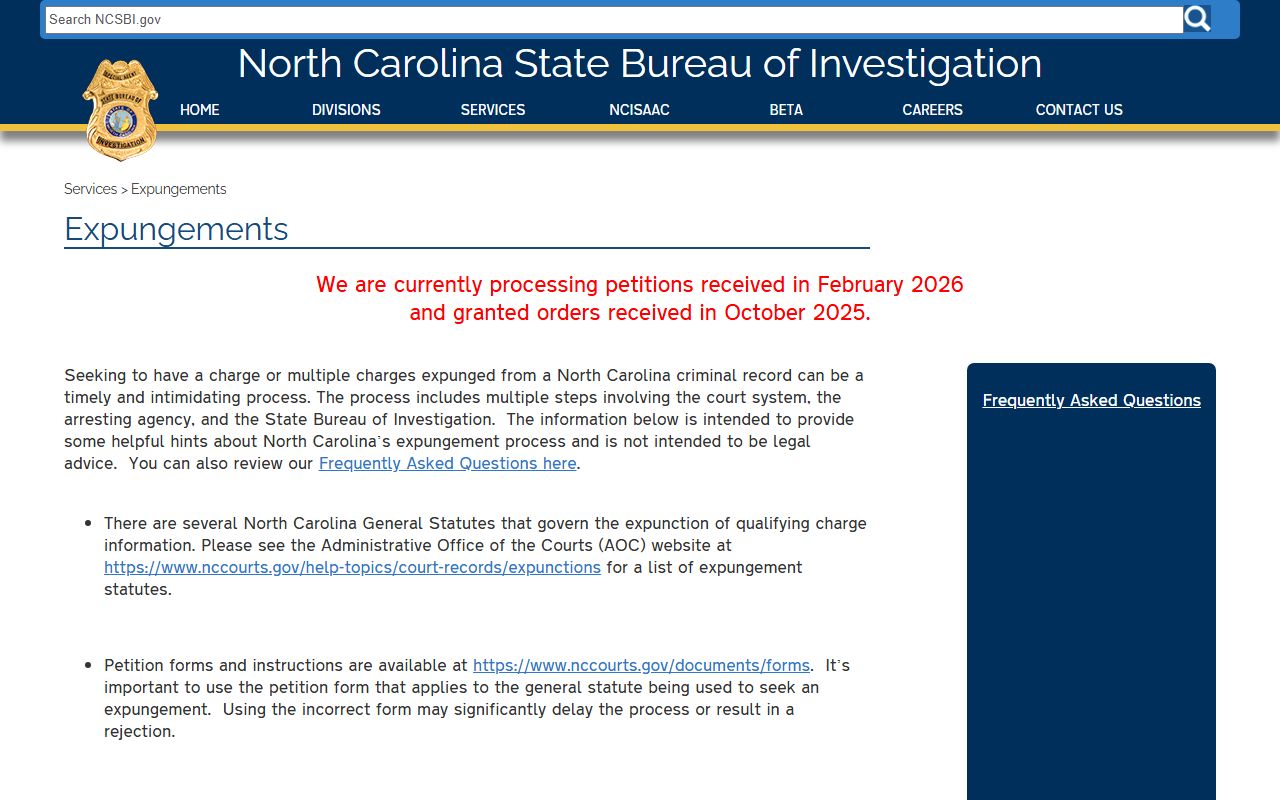
The NC Judicial Branch expunctions page provides forms and step-by-step guides for filing on your own. You can also seek help from Legal Aid of North Carolina or a private attorney.
Sex Offender Registry in North Carolina
The NC Sex Offender Registry is maintained by the SBI and tracks individuals convicted of certain offenses. The registry includes those convicted of offenses against minors since 1998 and sexually violent offenses since 1996. You can search by name, street address, or GPS coordinates. Many records include color photographs and physical descriptions. Under N.C.G.S. 14-208.5 through 14-208.12A, registered sex offenders must verify their address and comply with reporting requirements.
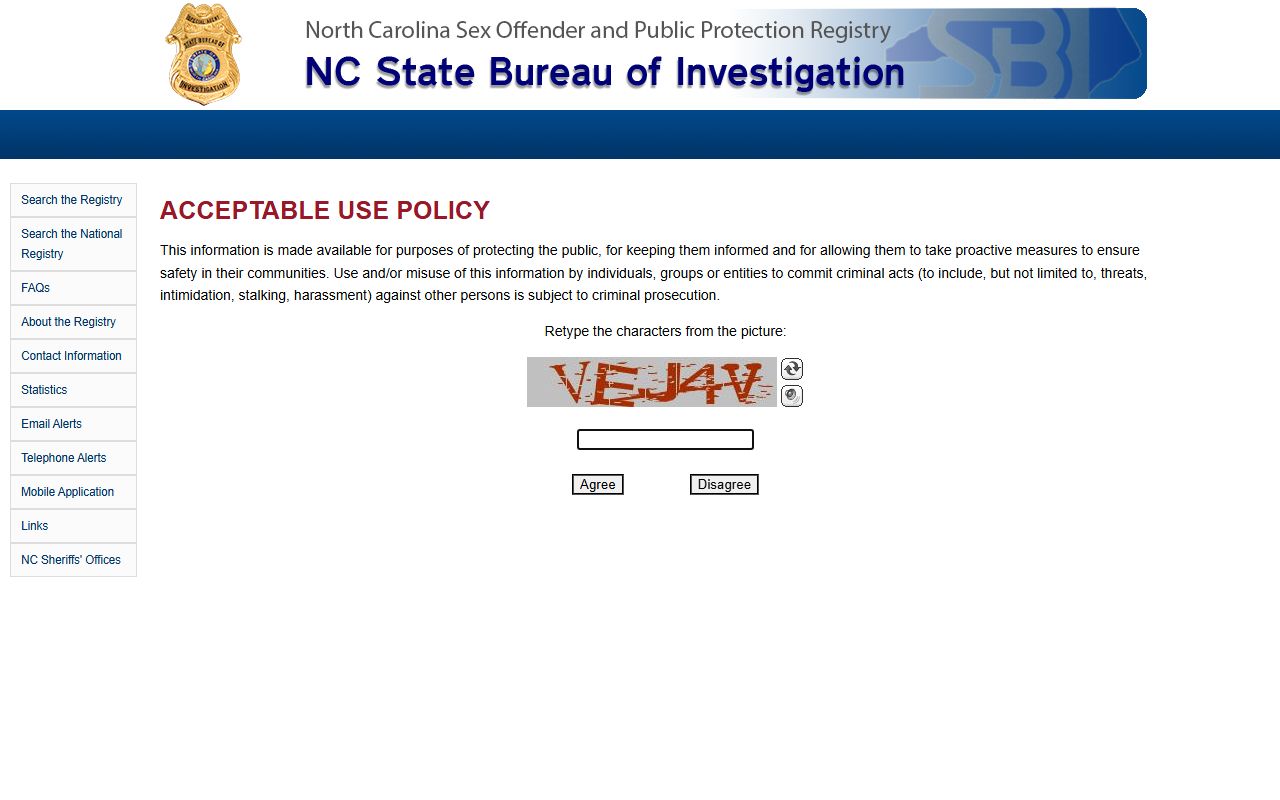
This registry is separate from general police blotter records. It is a public safety tool. Law enforcement agencies across North Carolina update it when offenders move, and the SBI posts changes to the online database. Anyone can search the registry without a fee.
Public Records Law and Police Blotter Access
Under the North Carolina Public Records Act, N.C.G.S. Chapter 132, police blotter records are generally public. The law defines public records broadly as "all documents, papers, letters, maps, books, photographs, films, sound recordings, magnetic or other tapes, electronic data-processing records, artifacts, or other documentary material" made or received in connection with public business. Booking information, arrest logs, and incident reports fall under this definition.
Some limits apply. Under N.C.G.S. 132-1.4, certain criminal investigation records may be withheld when release would interfere with an ongoing case, deprive a person of a fair trial, disclose confidential informants, or reveal investigative techniques. Body camera and dashcam footage falls under N.C.G.S. 132-1.4A and generally requires a court order for release. But standard police blotter entries like arrest names, charges, booking dates, and bond amounts are open to the public in North Carolina.
You can submit public records requests to any North Carolina law enforcement agency. The NC Department of Public Safety accepts requests online. The NC State Highway Patrol has its own request process. County Sheriff's Offices and city police departments each handle their own requests. Simple requests are often fulfilled within days, while complex ones may take weeks.
Note: All restrictions on access to public records expire 100 years after the creation of the record under G.S. 132-11, with certain exceptions for sealed records and juvenile information.
More North Carolina Police Blotter Resources
Several state agencies provide tools and data related to police blotter records. The NC Department of Adult Correction handles public records requests for state prison and supervision records. The NC Department of Justice runs public protection programs and publishes information about consumer fraud, identity theft, and other criminal activity.
The NC Alcohol Law Enforcement division investigates crimes involving alcohol, drugs, and gambling. Their records are part of the broader police blotter landscape in North Carolina. The Office of Victim Compensation Services helps crime victims apply for financial assistance. Victims can also register for the NC SAVAN system to receive notifications about offender custody changes.
The NC Judicial Branch public records request page handles requests for court documents. The NC DOJ Legal Services page covers additional legal resources. The NC DOJ Identity Theft page provides guidance for victims of identity crimes.
County Sheriff Police Blotter Records
Each North Carolina county has a Sheriff's Office that logs arrests and bookings. These police blotter entries include the person's name, charges, bond amount, and booking date. Most Sheriff's Offices in North Carolina post daily arrest logs on their websites. Some North Carolina counties run P2C portals where you can search police blotter data by name or date range.
North Carolina law requires that booking records be made available to the public. When someone is arrested and booked into a county jail, the Sheriff's Office creates a police blotter entry. This record is public from the moment it is created. You can request copies in person, by mail, or through online portals. Fees vary by county but are typically minimal for police blotter searches.
City police departments in North Carolina also maintain their own police blotter records. Larger cities like Charlotte, Raleigh, Greensboro, and Durham publish incident reports and arrest records online. These blotter records cover criminal cases and arrests within city limits. For booking records and arrests outside city limits, check the county Sheriff's Office police blotter instead.
How North Carolina Police Blotter Data Is Used
Police blotter records in North Carolina serve many purposes. Residents check arrest records and booking logs to stay informed about criminal activity in their area. Attorneys search police blotter records to prepare for criminal court cases. Journalists use blotter data and arrest reports to cover crime trends across North Carolina counties.
Background check companies also rely on North Carolina police blotter records. They pull arrest records and criminal case data from county courts and Sheriff's Offices to compile reports. Under the Fair Credit Reporting Act, consumer reporting agencies must follow specific rules when using police blotter information. Criminal records and arrest records older than seven years generally cannot appear on most background reports.
Note: Police blotter entries show arrests, not convictions, and an arrest record does not mean a person was found guilty of a crime.
Browse North Carolina Police Blotter by County
Each county in North Carolina has a Sheriff's Office that keeps police blotter records. Pick a county below to find local contact info and arrest record resources.
Police Blotter in Major North Carolina Cities
City police departments publish their own police blotter data. Pick a city below to learn about arrest records and incident reports in that area.